
Oil return in heat pumps SPLIT and FULL SPLIT: causes, risks and technical solutions
Introduction
Return of oil to heat pumps is an essential aspect for the safe operation of refrigeration systems SPLIT and FULL SPLITIn practice, oil circulation depends on the correct design of the installation, 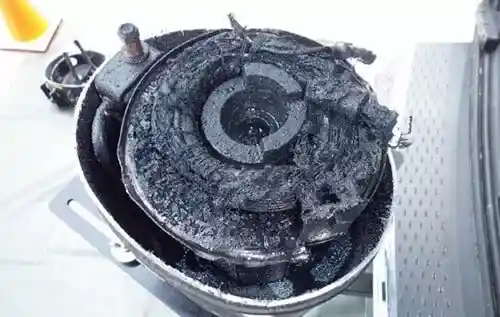 by the speed of the refrigerant and the configuration of the routes.
If oil return is not ensured, efficiency losses, noise, protective shutdowns and compressor failure may occur. For this reason, controlling the oil circulation in the refrigeration circuit is critical from the design stage.
The importance of oil circulation in the system
The oil acts as a lubricant for the compressor and circulates partially with the refrigerant. In normal operation, it must constantly return to the crankcase.
Problems arise when oil return in heat pumps is disrupted, which leads to: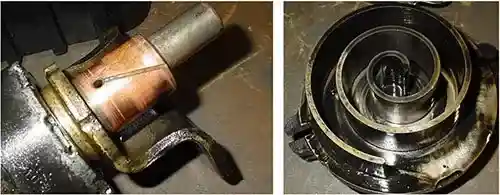
- accelerated compressor wear
- decrease in energy efficiency
- abnormal mechanical noises
- safety stops
Oil transport mechanism
In modern refrigerant systems HFC/HFO, the oil is partially miscible and is entrained in the form of a fine mist in the circuit.
The phenomenon is influenced by:
- dissolving oil in refrigerant
- aerosol entrainment
- separation in low pressure areas
At startup, transient phenomena occur:
- sudden drop in crankcase pressure
- boiling of dissolved refrigerant
- gas-oil emulsion formation
- the occurrence of the "oil foaming" phenomenon
These effects directly influence oil return in heat pumps.
SPLIT and FULL SPLIT systems
The configuration of the installation has a major impact on oil circulation.
SPLIT
- compressor located outside
- internal condenser
- oil return depends on the discharge line
FULL SPLIT
- internal compressor
- evaporator exterior
- increased risk of accumulation in the suction line
In both cases, the correct circulation of the oil depends on the hydrodynamic balance of the system.
Refrigerant speed
A critical factor for oil transportation is the velocity of the gas in the pipelines.
Indicative values:
- < 2.5 m/s → oil separation, high risk
- ~5 m/s → minimum threshold for stable transport
- 8–9 m/s → critical regime in vertical columns
20 m/s → pressure losses and noise
When the speed drops below the minimum threshold, oil return in heat pumps becomes unstable.
Influence of level differences
Vertical paths directly influence the behavior of the oil in the system.
- ΔH > 3 m → risk of progressive accumulation
- ΔH > 7.5 m → oil film interruption
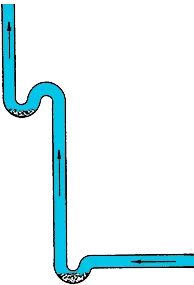
- required: oil siphons at regular intervals
Without these measures, correct oil circulation cannot be guaranteed.
Siphons and controls
Siphons are used to stabilize the flow in vertical columns.
Main roles:
- preventing oil accumulation
- maintaining controlled transport
- reducing the risk of hydraulic blockage
These elements are essential for maintaining stability in oil return in heat pumps.
Variable load operation
In partial load mode, the refrigerant flow rate decreases, which reduces the velocity in the pipes.
Example:
- 100% load → ~6 m/s ✔
- 50% load → ~3 m/s ✖
Under these conditions, oil transport becomes insufficient, and part of the oil remains in the evaporator or in the pipes.
Transient problems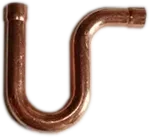
Instabilities frequently occur when starting and stopping:
- foaming in the crankcase
- insufficient evaporator supply
- low pressure shutdowns
- risk of mechanical shock to the compressor
These phenomena are directly related to the circulation of oil in the circuit.
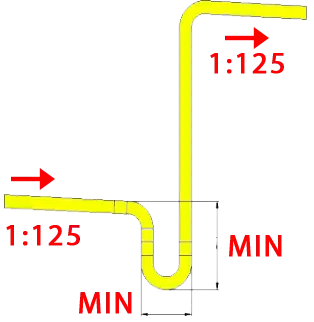
Design recommendations (OTHER GROUP)
To ensure stable operation and correct oil returns in heat pumps, it is recommended:
- maintaining speed ≥ 5 m/s
- pipe slope ≥ 12 mm/m
- avoiding stagnation areas
- installation of siphons at 3–7.5 m
- limiting level differences
- optimization of frequent starts
Conclusion
Correct oil circulation in refrigeration systems is essential for system reliability. Oil return in heat pumps depends on the design of the pipes, the speed of the refrigerant and compliance with the installation rules.
Proper design reduces the risk of compressor failure and ensures long-term stable operation.


